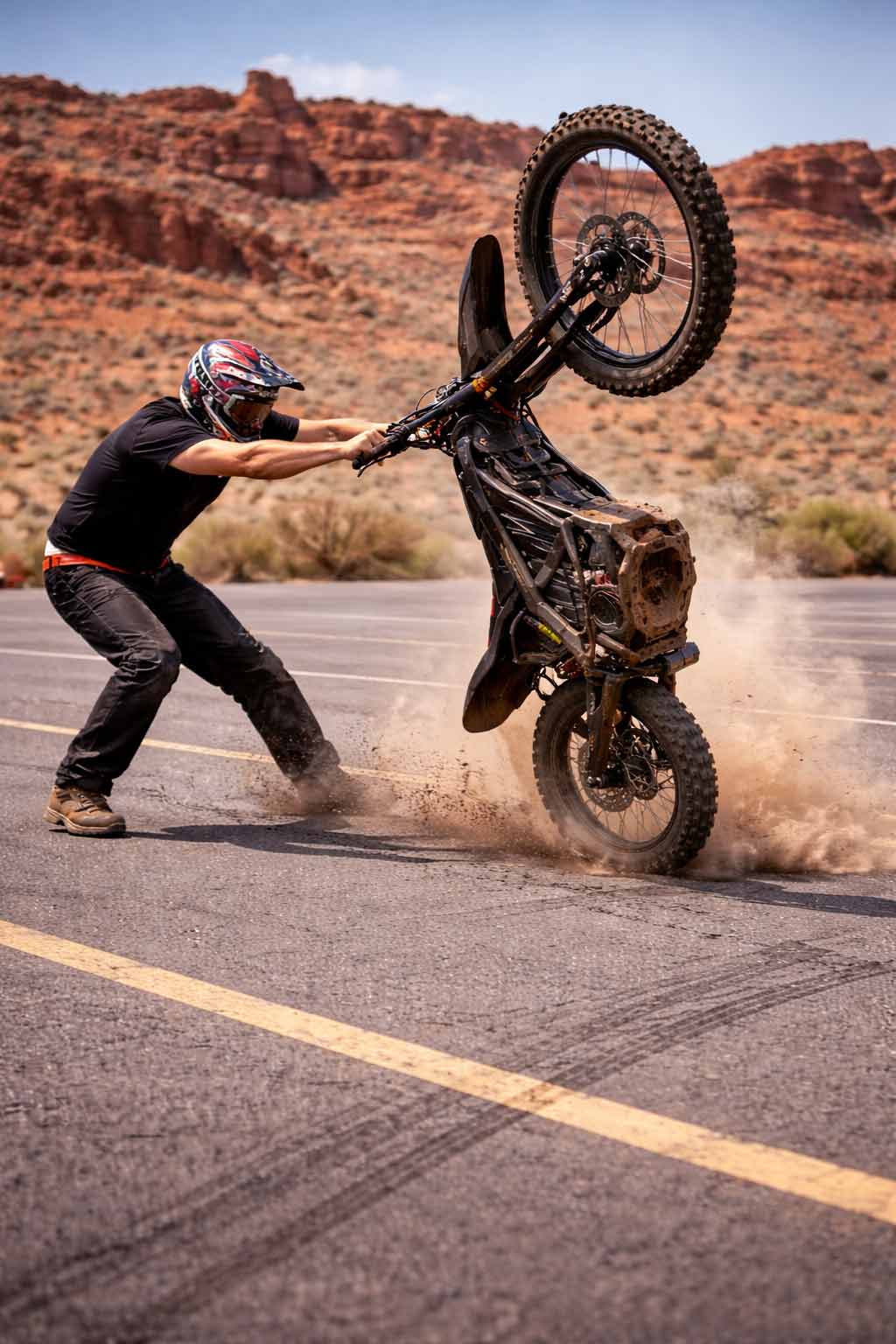
How not to Loop Your Electric Dirt Bike: Pointer Finger Up
Pinkies Up? Not Here. Pointer Finger Up.
In polite society, pinkies up means refinement. Tea cups. Etiquette. A gentle signal that you know what you’re doing.
Out here?
Pinkies up will get you looped.
In the world of electric dirt bikes—especially full-power, surron-style e-motos—our version of manners looks a little different. Around here, it’s pointer finger up. And it’s not about class. It’s about control.
“But I Ride a KTM…”
We hear this one all the time.
“I ride a KTM.”
“I’ve been riding for years.”
“I’m advanced.”
And then… loop.
Here’s the thing: looping out doesn’t care what you ride—or what you used to ride. Gas bikes, clutch bikes, race bikes… none of that translates cleanly to instant electric torque. The throttle response is different. The timing is different. The consequences are faster.
We’ve seen experienced riders—yes, the KTM crowd included—get caught off guard in the first few minutes. Not because they’re bad riders, but because electric dirt bikes don’t wait for muscle memory to catch up.
That’s why pointer finger up isn’t a beginner rule. It’s a universal one.
If you haven’t ridden a full-power e-dirt bike before, no one is immune. Skill doesn’t make you safe—habits do. And the back brake is the habit that keeps even experienced riders from learning the hard way.
Why Your Pointer Finger Matters More Than Your Pinky
Electric dirt bikes deliver torque instantly. No clutch. No delay. Just now.
That’s the magic—and the trap.
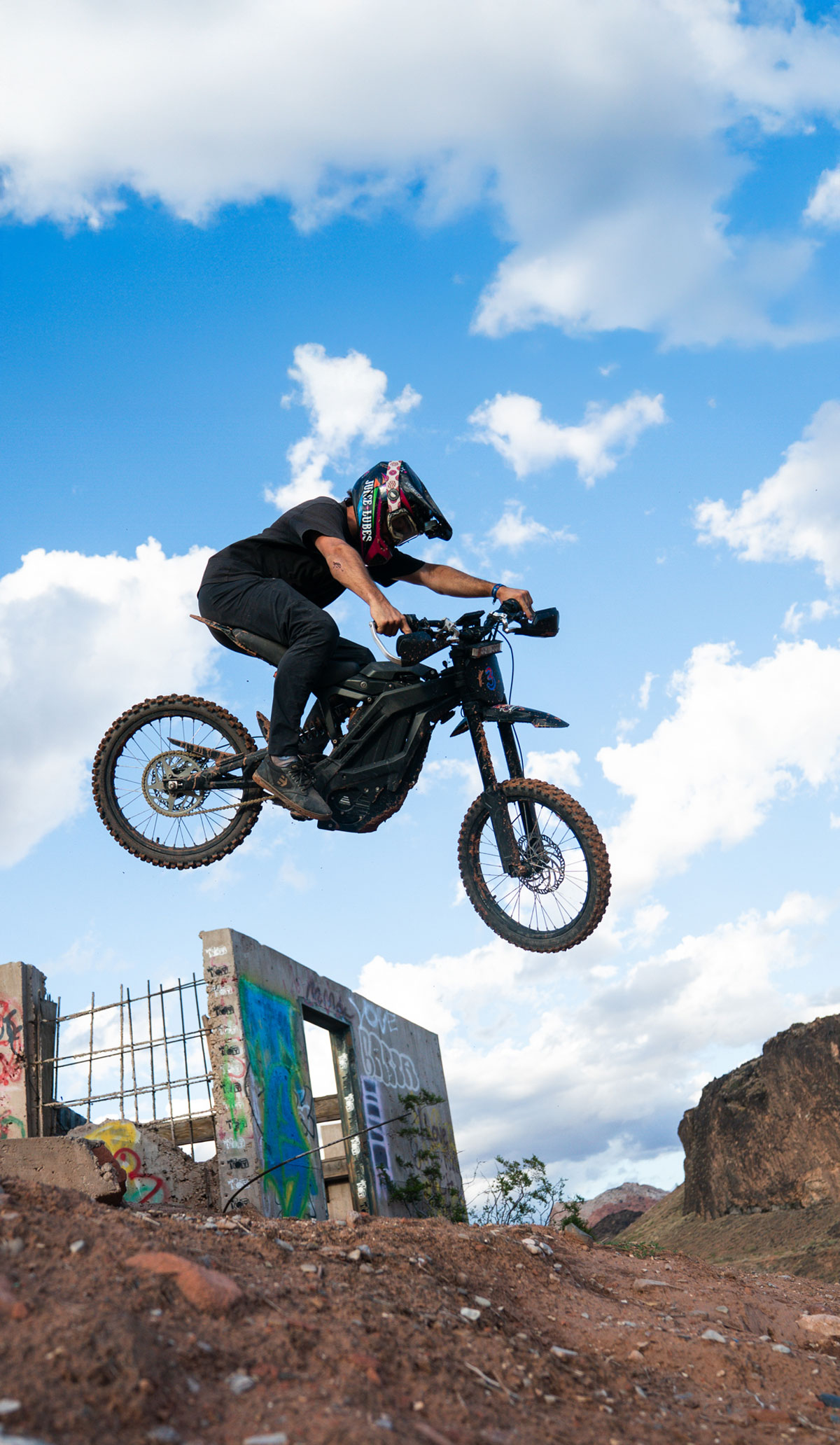
New riders, especially those coming from bicycles or street e-bikes, tend to do the same thing when the bike surges: they stiffen up, roll on more throttle than intended, and instinctively pull back. That’s how looping happens.
The fix isn’t fear.
It’s form.
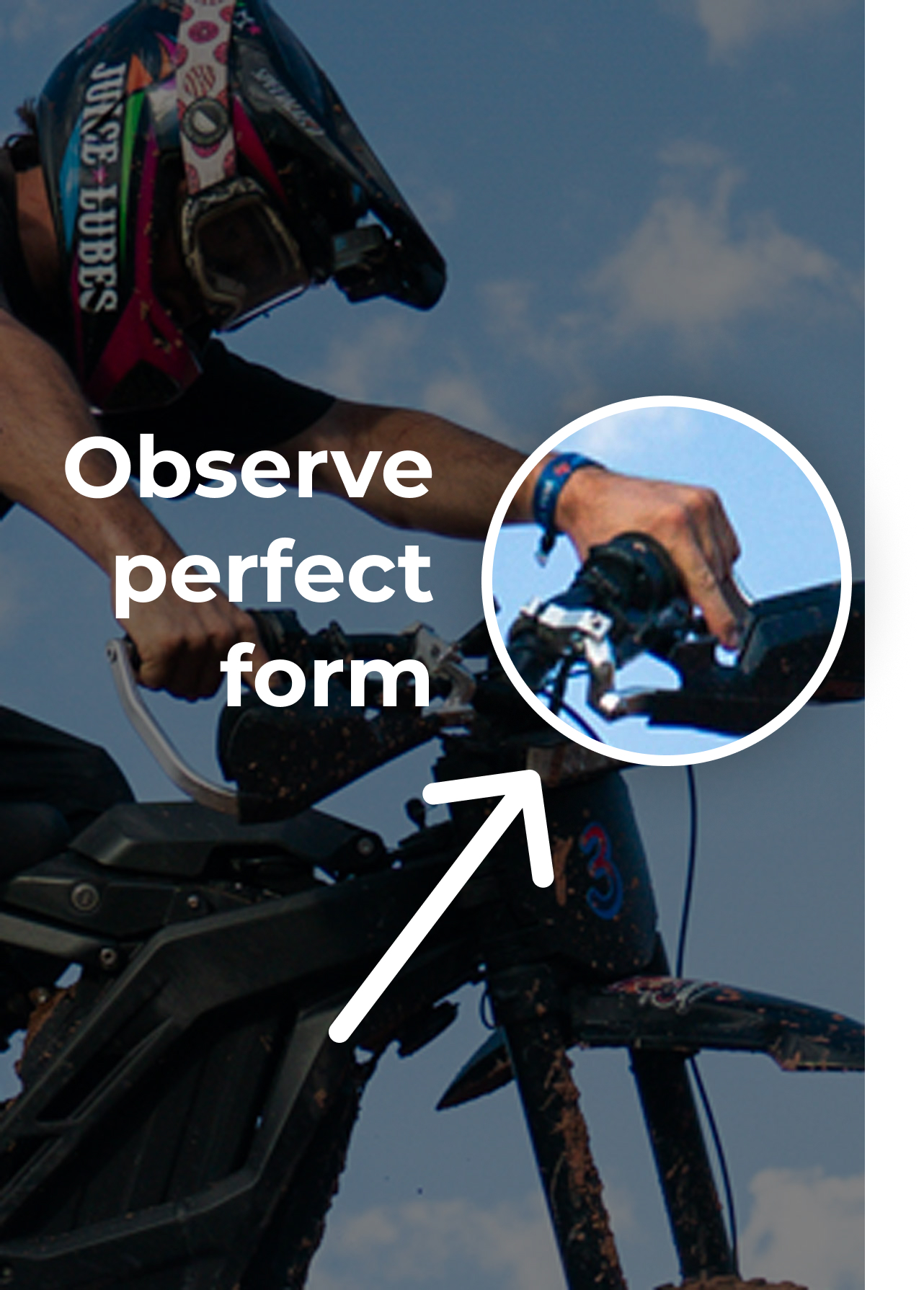
Keeping one finger resting on the back brake at all times dramatically reduces looping incidents. Not because you’re braking constantly—but because your body knows it has an immediate out.
That finger is your insurance policy.
Why This Works
The brakes are equipped with sensors that immediately cut power to the motor. Keeping a finger on the brake gives you an instant way to manage torque before it becomes a problem.
Honestly, this should feel familiar to anyone who’s ridden a bicycle. Ever mounted a bike on a hill? You grab the brake just to get on. And when you stop—especially in Utah—you’re rarely on perfectly flat ground. Keeping a finger on the brake is simply good riding habits, whether you’re pedaling or riding electric.
Back Brake = Confidence, Not Caution
There’s a misconception that riding “correctly” means riding timidly. That couldn’t be further from the truth.
The riders who loop bikes are rarely reckless—they’re usually unprepared. When torque surprises them, they don’t have a reflex built in yet.
Back brake discipline builds that reflex.
- You roll on power
- The bike responds instantly
- Your finger is already there
A light tap settles the bike, drops the front end, and keeps everything calm. Smooth. Controlled. Intentional.
That’s not beginner behavior. That’s rider behavior.
Why We Teach This on Day One
At SoTah Adventures, we don’t believe in detuning bikes into boredom. We believe in teaching people how to ride real machines safely.
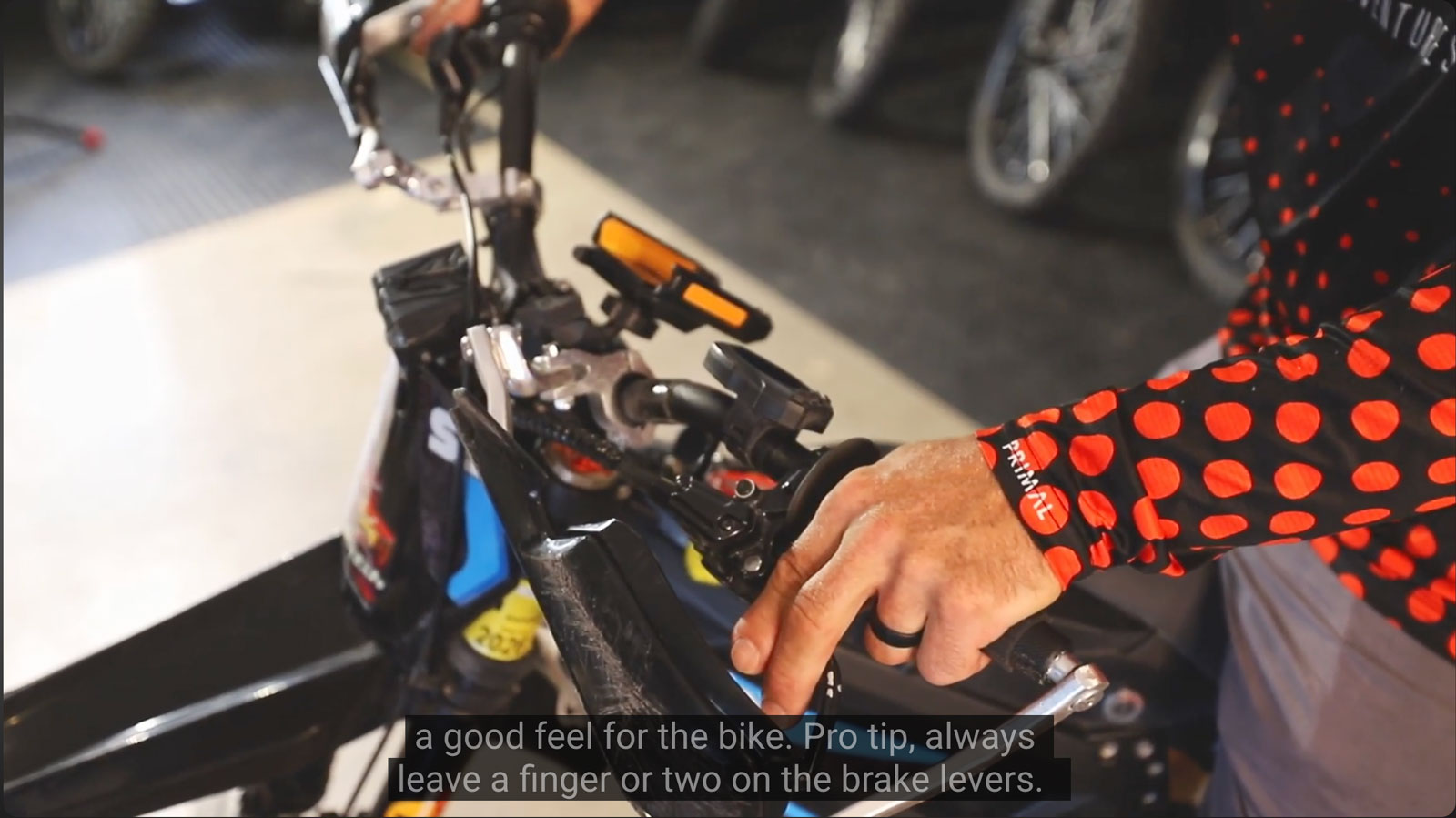
That’s why pointer finger up is part of our skills briefing from the start—right alongside body position, throttle control, and terrain awareness.
We’d rather give you a simple habit that:
- prevents crashes
- builds confidence fast
- carries over to every bike you’ll ever ride
Than water things down and hope for the best.
The Irony: This One Rule Unlocks More Fun
Here’s the funny part.
Once riders trust the back brake, they actually ride harder—and better.
They’re smoother on climbs. More relaxed in sand. Less tense when the bike surges. Because they know they’re not one throttle mistake away from being on their back.
Pointer finger up doesn’t limit fun.
It unlocks it.
Our Version of “Good Form”
So no, we’re not sipping tea with our pinkies out.We want to see those pointer fingers up as you mount the bike—one finger always ready on the back brake.
That’s our version of etiquette.
It’s not fancy.
It’s just smart.
And in a land that dares to be ridden, good manners look a lot like good control.
Dirt Bike Riders: It’s Not the Power — It’s the Delivery
If you come from dirt bikes, especially two-strokes, you already know how to manage power. You understand throttle control, body position, and traction. That’s not the problem.
The problem is how electric delivers power.
On a two-stroke, power builds. There’s a moment. Even when it hits, it comes on. Your brain gets a fraction of a second to respond. Same with most four-strokes — smooth, predictable, and progressive.
Electric?
There’s no ramp. There’s no wait.
It’s not a power band — it’s insta-ban.
The bike does exactly what your wrist tells it to do, immediately. No clutch slip. No engine inertia. No delay. That instant torque is incredible… until it surprises you.
We know dirt bike riders can handle power. What catches people off guard is how fast electric gets there.
Four-Stroke Riders… Welcome to the Party
Not throwing shade — but if you’ve lived your life on four-strokes, prepare to feel like you’ve been missing something.
Electric torque feels closer to a perfectly jetted two-stroke than anything else. Smooth, punchy, and responsive — without the noise, heat, or maintenance.
And just like hopping on a fresh 2T after riding something tame, it demands respect.
That’s why the rule stays the same for everyone:
Pointer finger up. Back brake ready.
Because whether you came from KTMs, two-strokes, four-strokes, or nothing at all — instant torque doesn’t care about your résumé.


.avif)
SoTah Adventures is Southern Utah’s only electric dirt bike rental and guided tour company, located minutes from Zion National Park in Leeds, UT. We offer beginner-friendly rides, off-road tours, family adventures, and multi-day rentals.